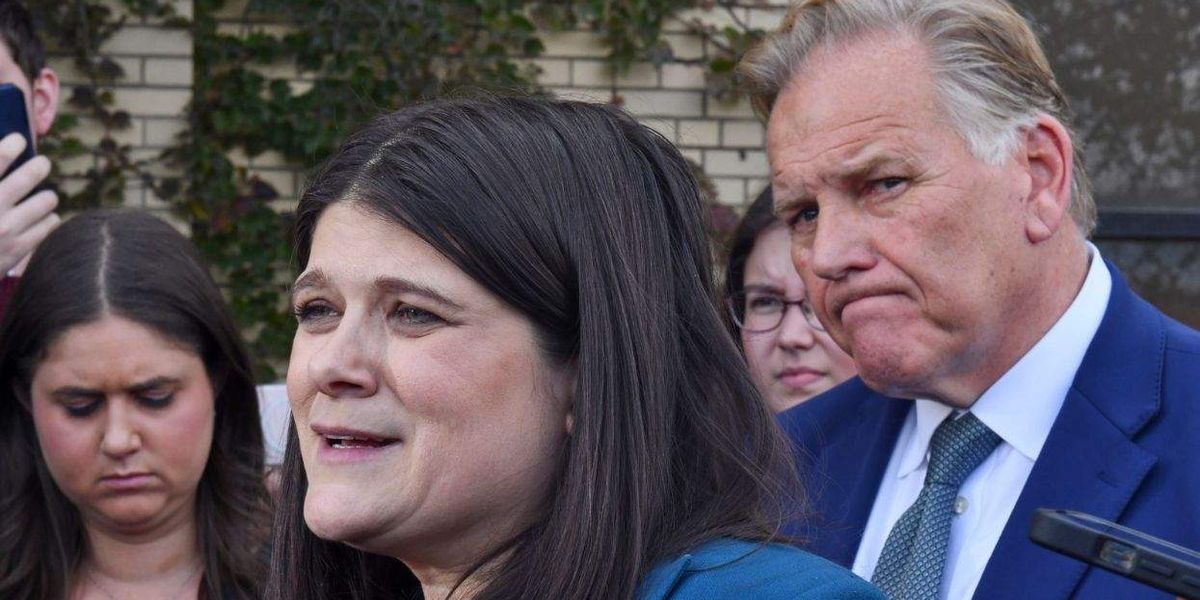
In a surprising development just days before a pivotal Senate election in Michigan, Democratic Congresswoman Haley Stevens announced her endorsement of her party's Republican opponent, Mike Rogers. The move, made alongside Rogers at a Detroit church, immediately fractured the state's Democratic coalition and drew swift condemnation from national and local party leaders who viewed the reversal as a severe betrayal in the final stretch of the campaign.
The unexpected alliance gave Rogers a prominent public display of support after a contentious primary race. Stevens, who had previously warned against the policies of the Republican candidate, chose to back him over the Democratic nominee, Dr. Abdul El-Sayed. The fallout was immediate, prompting senior party figures to denounce the decision and triggering high-level staff departures.
A Difficult Defense on National Television
By Sunday evening, Stevens appeared on national television to explain her sudden change of heart. During an extended interview, she struggled to reconcile her new position with her previous statements, pointing instead to personal grievances, party dynamics, and a general lack of civility rather than policy alignment.
When pressed on what specifically prompted her about-face regarding a candidate she had previously characterized as a threat to democratic governance, she described feeling a sense of personal relief and cited ongoing tensions within her party. Interviewers repeatedly asked how she could justify supporting a candidate whose platform sharply conflicted with her stated principles, particularly on issues important to progressive and civil rights organizations.
Just be honest, say that the check cleared.
Critics across the political spectrum quickly weighed in on the motives behind the endorsement, with many pointing to longstanding policy disputes and outside financial influences in party primaries. Organizations dedicated to protecting civil rights and marriage equality reaffirmed their backing for the Democratic nominee, emphasizing the stark policy differences between the candidates on the ballot.
High Stakes for Control of the Senate
The contest in Michigan represents a critical battleground in the broader fight for control of the United States Senate, following the retirement of the incumbent senator. While party leadership scrambled to contain the damage and refocus voters on core legislative priorities, analysts noted that the unexpected drama threatened to overshadow the final days of the campaign.
Whether the endorsement will significantly sway voters remains uncertain, but the public spectacle has thrust internal party tensions and the role of outside campaign spending squarely into the national spotlight.
Either she’s an absolute lunatic, or she just isn’t allowed to say what the real reason is so she’s endlessly spinning her wheels trying to deflect questions about it.

