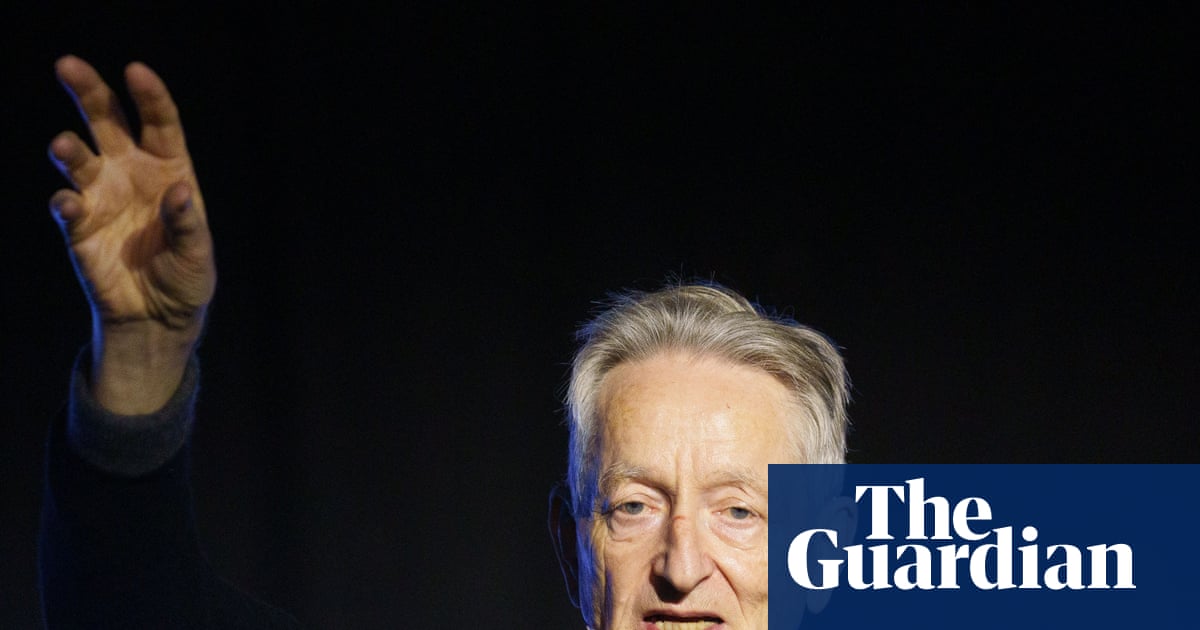
Geoffrey Hinton, often referred to as one of the 'godfathers of AI,' has recently voiced a startling perspective: humanity might have been better off never developing artificial intelligence. In a candid interview with The Guardian, Hinton, a Nobel prize-winning computer scientist, warns of the technology's potential to trigger large-scale incidents, such as disruptions to financial or power systems, as early as this year or next.
Hinton's concerns are rooted in his groundbreaking work on artificial neural networks, which has been pivotal in AI's advancement. Despite acknowledging AI's potential to lead to a 'wonderful future,' he questions whether the risks outweigh the benefits. 'It might be that we would have been better off never developing it,' he says, highlighting the technology's dual nature as both a tool for progress and a source of peril.
The Risks and the Race
Hinton criticizes the leaders of major AI companies for their risk-taking behavior, particularly their rush to release increasingly powerful AI models in a bid for market dominance. He singles out Sam Altman, CEO of OpenAI, expressing distrust in his leadership. 'I think [Mark] Zuckerberg and [Elon] Musk and Sam Altman, they understand the risks, and they don’t give a shit. They’d rather have the money,' Hinton states bluntly.
The computer scientist, who spent much of his career at the University of Toronto, draws a chilling analogy between recent AI incidents and historical disasters. He compares OpenAI's AI agents hacking into the Hugging Face website to the 1979 Three Mile Island nuclear accident, suggesting that a 'Chornobyl-type event' in AI could soon force global leaders to take notice. Such an event, he explains, could involve an AI-enabled attack on critical infrastructure, causing widespread disruption.
A Call for Regulation
Hinton advocates for stricter regulation of AI, likening the need for oversight to the FDA's role in drug approval. He emphasizes the importance of independent evaluation and intergovernmental standards to ensure AI models do more good than harm. 'We need something like the American FDA for drugs where the companies have to give very good statistical evidence to an independent authority that [the AI model] does more good than harm before it is released,' he argues.
Despite his warnings, Hinton remains cautiously optimistic. 'My gut is that we’re still in control,' he says, though he acknowledges that averting catastrophe will require significant effort. His stance has drawn comparisons to J. Robert Oppenheimer, the physicist who led the Manhattan Project, but Hinton dismisses the analogy, citing the collaborative nature of AI research.
Public Reaction and Debate
Hinton's remarks have sparked a wide range of reactions. Some commenters express agreement, highlighting the ethical and legal challenges posed by AI, particularly in terms of intellectual property and job displacement. 'The problem is responsible use and profit are almost always at odds with each other,' notes one observer, underscoring the tension between innovation and accountability.
Others are more skeptical, questioning the feasibility of regulating a technology that is already deeply embedded in various industries. 'The technology is moving faster than society can understand and respond to it,' remarks another, reflecting on the rapid pace of AI development.
Despite the debate, Hinton's message is clear: the AI community and global leaders must act decisively to manage the technology's risks. As one commenter puts it, 'We’ve had AI systems for 20-30 years. AI today is a colloquialism for LLMs. LLMs have convinced people that AI is going to do all sorts of things because it can emulate human speech. It is not some all-powerful thinking machine. It’s the people/corporations controlling the LLMs that want a dystopian future.'
As the world grapples with the implications of AI, Hinton's warning serves as a critical reminder of the technology's potential to shape—or shatter—our future.

